
Introduction: More Than Just a Stone—It’s a Story Billions of Years Old
For centuries, this teardrop-shaped island in the Indian Ocean—once known as Ceylon, now Sri Lanka—has been synonymous with the world’s most spectacular colored gemstones. From the regal cornflower blue sapphire gracing royal jewelry to the rare, sunset-hued Padparadscha, the island’s bounty is legendary. As a discerning collector or a jewelry connoisseur, you know that a gem’s value lies not just in its color and clarity, but in its story. So, what is the Ceylon Effect? It’s the unique convergence of ancient geology, meticulous traditional mining, and the unparalleled variety and quality that defines the rarity behind Sri Lanka’s gemstone legacy. Dive with us as we uncover the secrets of the world’s original “Gem Island”—Ratna Dweepa.
The Core of Rarity: Unpacking the Ceylon Effect
The “Ceylon Effect” is not a single geological event, but a term of reverence in the gem trade, encompassing the island’s unique combination of gemological factors that result in superior stones. At its heart is the extreme age of the island’s rock formations.
The Ancient Earth: A Geological Time Capsule
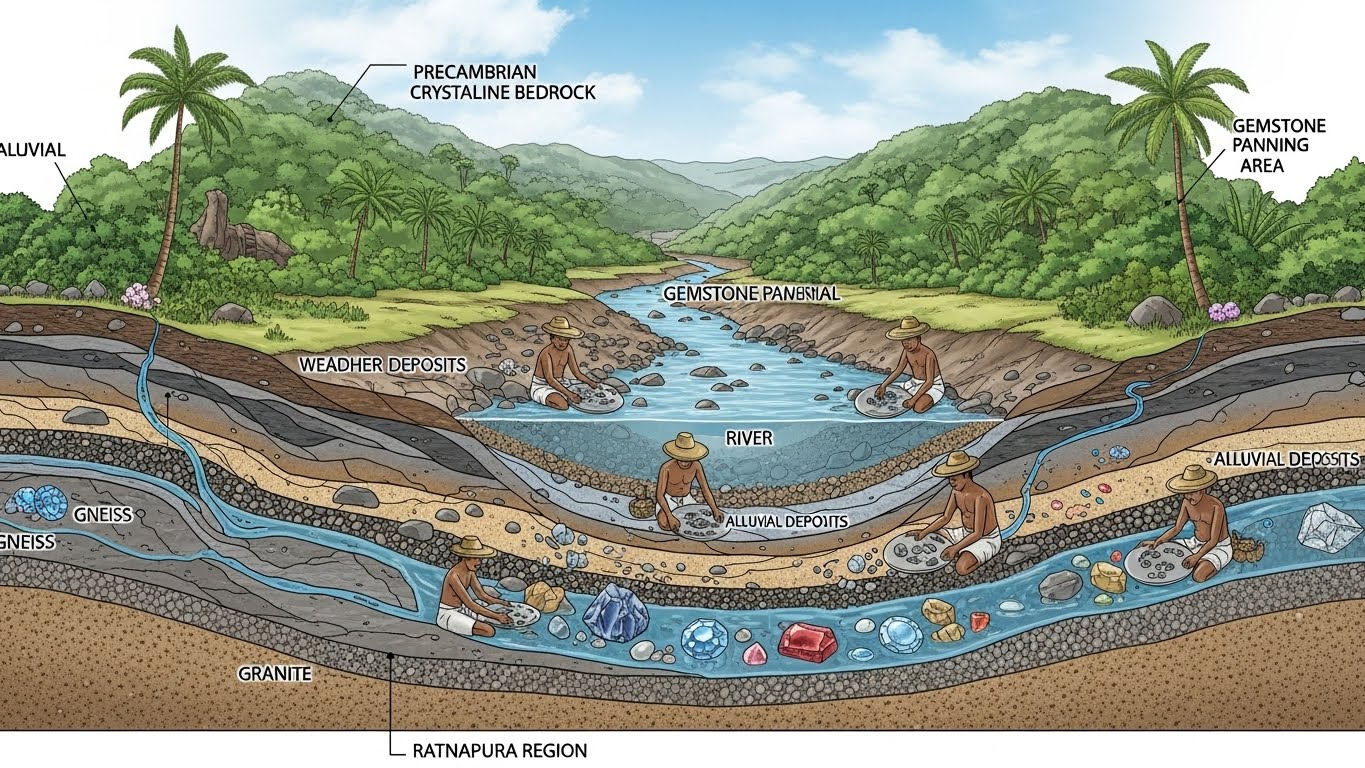
Approximately 90% of Sri Lanka is composed of Precambrian crystalline rock, dating back over 540 million years. This makes it one of the most geologically ancient landmasses on Earth. This immense timescale, coupled with extreme metamorphic pressures and heat, created the perfect ‘pressure cooker’ for a staggering array of minerals to crystallize into precious stones.
Unlike many other major gem deposits, which are often found in primary hard-rock mines, most of Sri Lanka’s gems are sourced from rich alluvial (riverbed) deposits. The constant erosion of the ancient Highland Complex, washing gems into the rivers and valleys around Ratnapura—the “City of Gems”—makes for a wide variety of easily accessible treasures. This geological jackpot is the first, essential component of the Ceylon Effect.
From Ratnapura to Royalty: The Diversity of Ceylon Gemstones
The diversity of gemstones found here is unparalleled in such a compact landmass. This variety, coupled with world-renowned quality, solidifies the rarity behind Sri Lanka’s gemstone legacy.
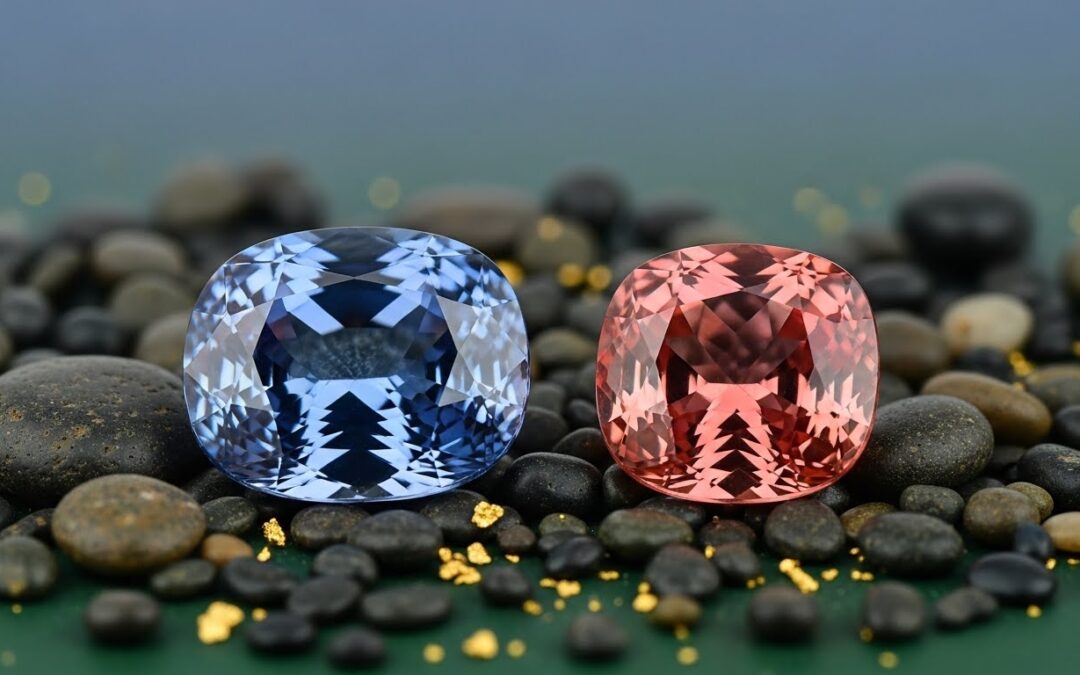
- The Blue Standard: Ceylon Sapphire The most famous contribution is the Ceylon Sapphire. These stones are celebrated for their vivid, high-saturation, yet often lighter and brighter “cornflower” blue compared to sapphires from other origins. This signature luminosity, a hallmark of the Ceylon Effect, has made them a favorite of global royalty, including a famous 12-carat oval sapphire that once belonged to Princess Diana.
- The Sunset Gem: Padparadscha Sapphire Arguably the pinnacle of rarity is the Padparadscha Sapphire, a delicate blend of pink and orange—like a tropical sunset—that is uniquely and historically sourced from Sri Lanka. Named after the Sinhalese word for ‘lotus flower’ (padma raga), an untreated, high-quality Padparadscha commands a premium that few other stones can rival.
- Beyond Sapphire: The island also yields exceptional rubies, chrysoberyl cat’s eyes, garnets, tourmalines, and more, all distinguished by the exceptional clarity and color saturation typical of this origin.
The Sustainable Heritage: Traditional Mining and Ethical Sourcing
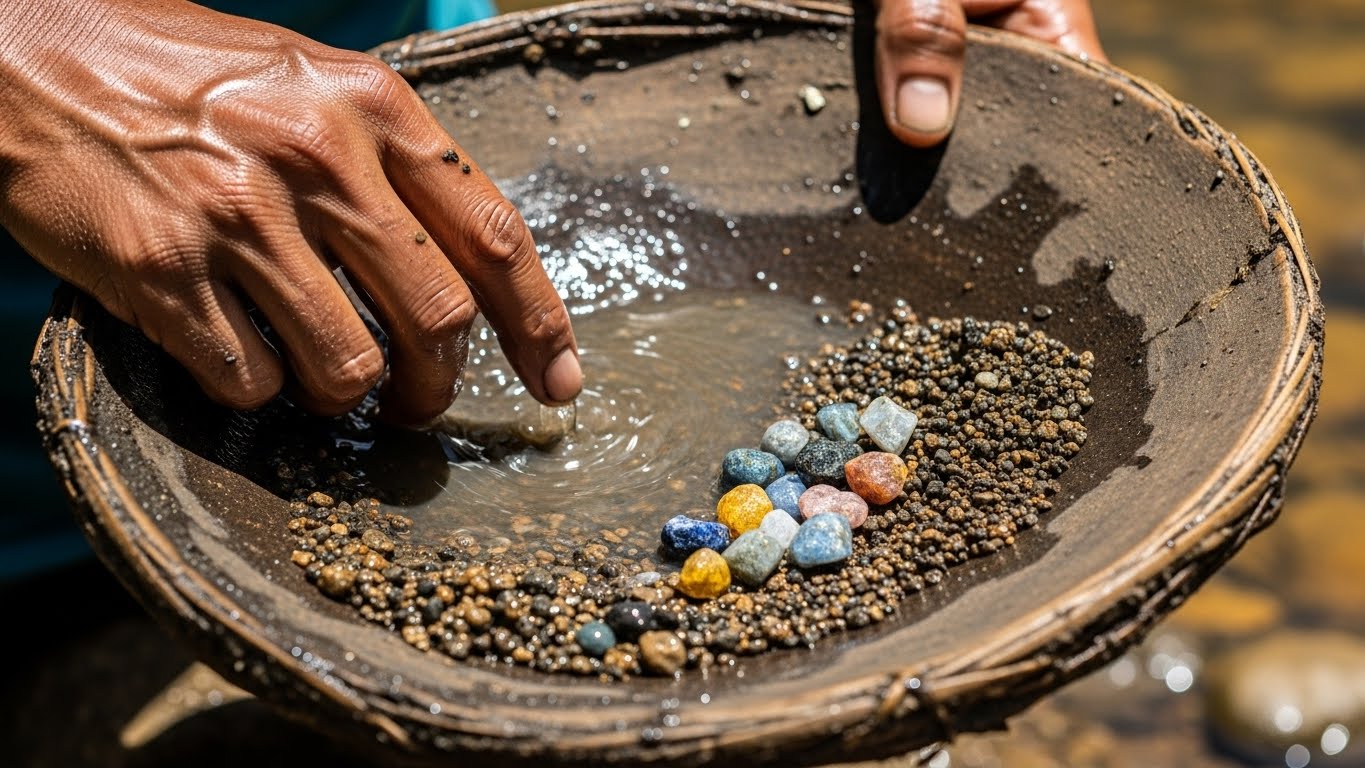
As a collector, you understand the importance of provenance. The final piece of the Ceylon Effect is the predominantly small-scale, traditional, and eco-friendly mining practices. Historically, the industry has relied on pit mining and river panning using simple, time-honored methods, minimizing environmental damage compared to large-scale mechanized operations. This dedication to low-impact, sustainable practices ensures the Sri Lanka gemstone story remains ethical and rooted in community heritage.
Own a Piece of the Ceylon Effect
The Ceylon Effect is the beautiful synergy of ancient geology, the unparalleled quality of the Ceylon Sapphire and Padparadscha, and a legacy of ethical, traditional sourcing. For the astute collector, owning a genuine stone from this island is to hold a fragment of deep Earth history and a piece of royal heritage.
Are you ready to add a piece of this exceptional rarity to your collection? Explore our curated selection of certified, ethically sourced Ceylon Sapphires and Padparadscha gems today. Click here to speak with our gemologist about finding your perfect, historically significant Sri Lanka gemstone.