
Introduction: When a Gem Captures the Cosmos
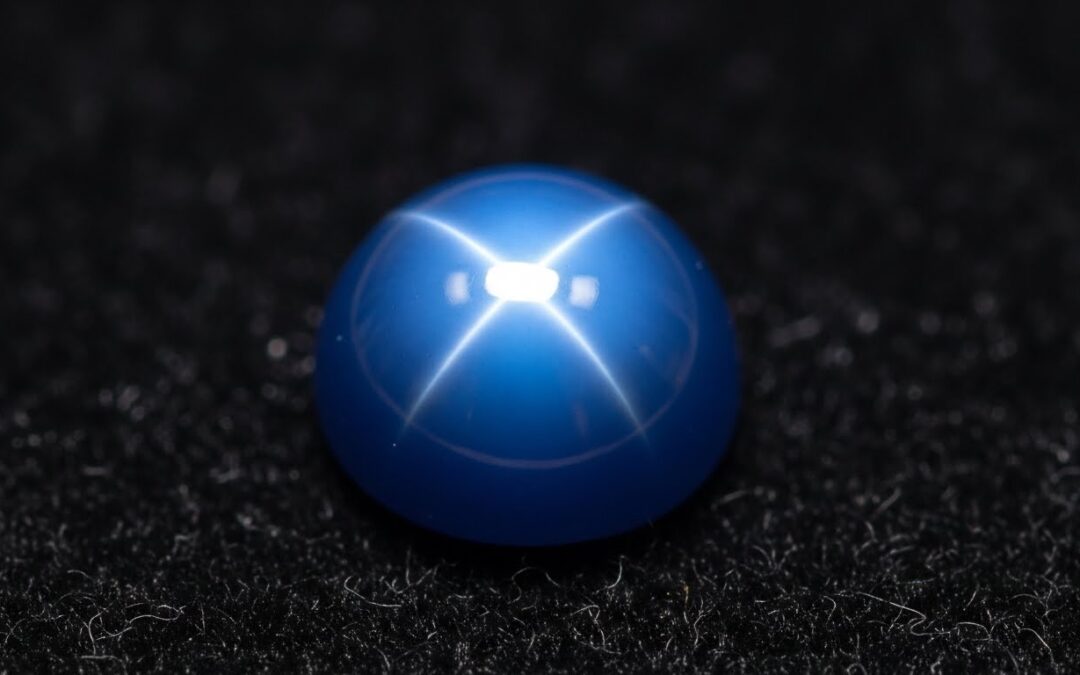
You’ve likely admired a sapphire—that deep, velvety blue gemstone symbolizing royalty and wisdom. But have you ever encountered a sapphire that holds a star within its depths?
The difference between a Star Sapphire vs. Regular Sapphires is not merely aesthetic; it’s a brilliant geological secret revealed by the Phenomenon of Asterism. This article will guide savvy buyers and enthusiasts like you through the science, the distinct visual qualities, and the key factors that determine the value of these phenomenal stones. If you want to know what truly makes a star sapphire a rarity worth collecting, read on.
The Fundamental Difference: Corundum with a Twist
Both star sapphires and regular sapphires are members of the same mineral family: Corundum (Aluminum Oxide, 1$\text{Al}_2\text{O}_3$).2 They share the same exceptional hardness (9 on the Mohs scale) and can come in a variety of colors (blue, pink, yellow, etc.).3However, a star sapphire possesses a specific internal structure that separates it into a class of its own—the “phenomenal” stones.
Asterism Explained: The Magic of Rutile Inclusions
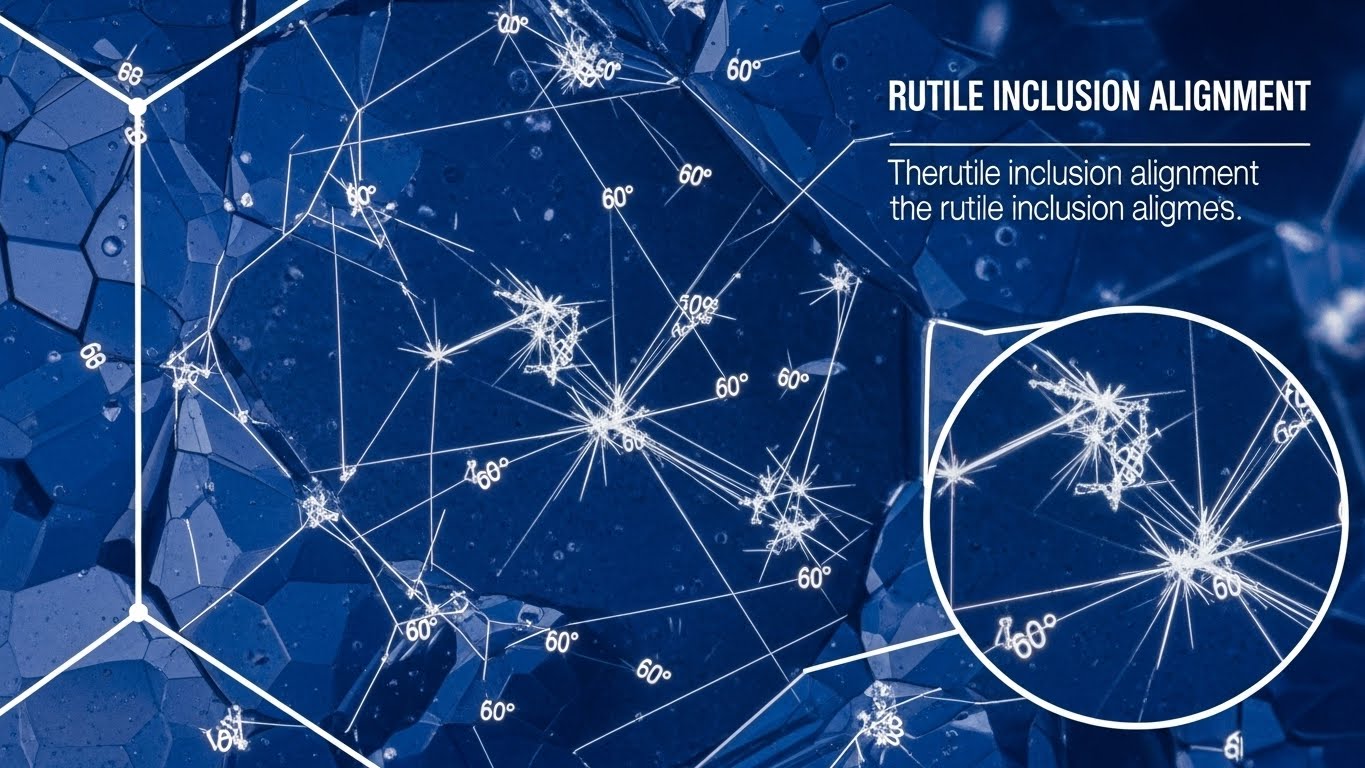
The spectacular star-shaped pattern, or asterism, is caused by microscopic, needle-like mineral impurities—primarily rutile inclusions (titanium dioxide).4 These inclusions, often referred to as “silk,” are not random flaws.5 They are perfectly aligned in three sets, crossing at 60-degree angles, mirroring the hexagonal crystal structure of the sapphire itself.When a single beam of light hits these millions of parallel needles, the light is reflected back to the viewer, creating three bright lines that intersect to form a luminous, six-rayed star that appears to float across the gem’s surface.
The Cut: Why Star Sapphires Demand the Cabochon
To unlock the optical potential of asterism, the gemstone cutter must approach the stone in a completely different way than a regular sapphire.
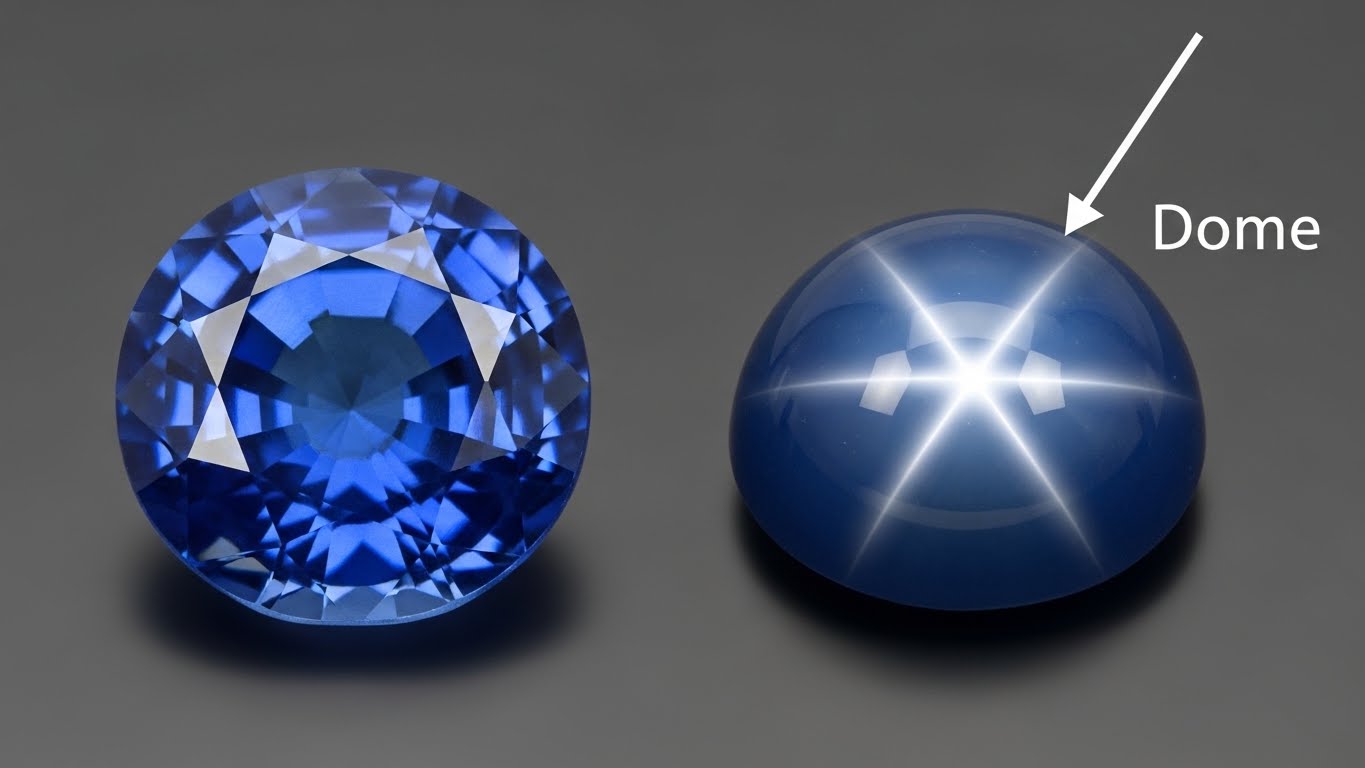
Regular sapphires are faceted (cut with many flat faces) to maximize internal reflection, brilliance, and scintillation (sparkle). This cut is designed for the clearest, most inclusion-free material.
Star sapphires, conversely, are cut en cabochon: a smooth, highly polished, domed shape with a flat or slightly rounded base.
- Necessity of the Cut: The dome acts as a focusing lens, concentrating the light scattering off the aligned rutile inclusions and drawing the star to the surface.
- Orientation is Key: The cutter must orient the dome’s base perfectly parallel to the inclusion plane to ensure the star is sharp and centered.9 Without this precise cabochon cut, the star effect remains hidden.
Visual and Value Comparison: Star Sapphires vs. Regular Sapphires
The key differences between Star Sapphires vs. Regular Sapphires can be summarized by clarity and transparency, which directly influence their market value of star sapphire.
| Feature | Regular (Faceted) Sapphire | Star (Asteriated) Sapphire |
| Ideal Clarity | Eye-clean (minimal or no inclusions) | Requires needle-like rutile inclusions |
| Transparency | Highly transparent/Translucent | Opaque to Translucent |
| Cut Style | Faceted (Brilliant, Oval, Cushion, etc.) | Cabochon cut (Smooth dome) |
| Light Effect | Brilliance, Scintillation (Internal Sparkle) | Phenomenon of Asterism (Star effect) |
| Star Movement | None | Star glides across the surface when the gem or light moves. |
What Determines the Value of Star Sapphire?
While a regular sapphire’s value is driven by color saturation and clarity, the value of star sapphire is based on four main factors:
Star Quality: The rays must be sharp, straight, and unbroken, extending from the center to the girdle. The star must be perfectly centered.
- Star Mobility: The star should glide elegantly and smoothly across the dome when the light source moves—a true hallmark of natural asterism.
- Body Color: Like a regular sapphire, a saturated, vivid body color (e.g., deep blue or pink) provides the best contrast for the star.
- Transparency: While star sapphires are rarely transparent, a desirable stone is translucent enough to let light penetrate and maximize the star’s contrast.
Conclusion & High-CR
Ultimately, both star sapphires and regular sapphires are magnificent, durable forms of corundum. The choice between them comes down to whether you prioritize the crisp brilliance of a faceted gem or the singular, moving celestial wonder of the Phenomenon of Asterism.The star sapphire is the perfect phenomenal stone for the buyer who values a one-of-a-kind, geological masterpiece over flawless clarity.