
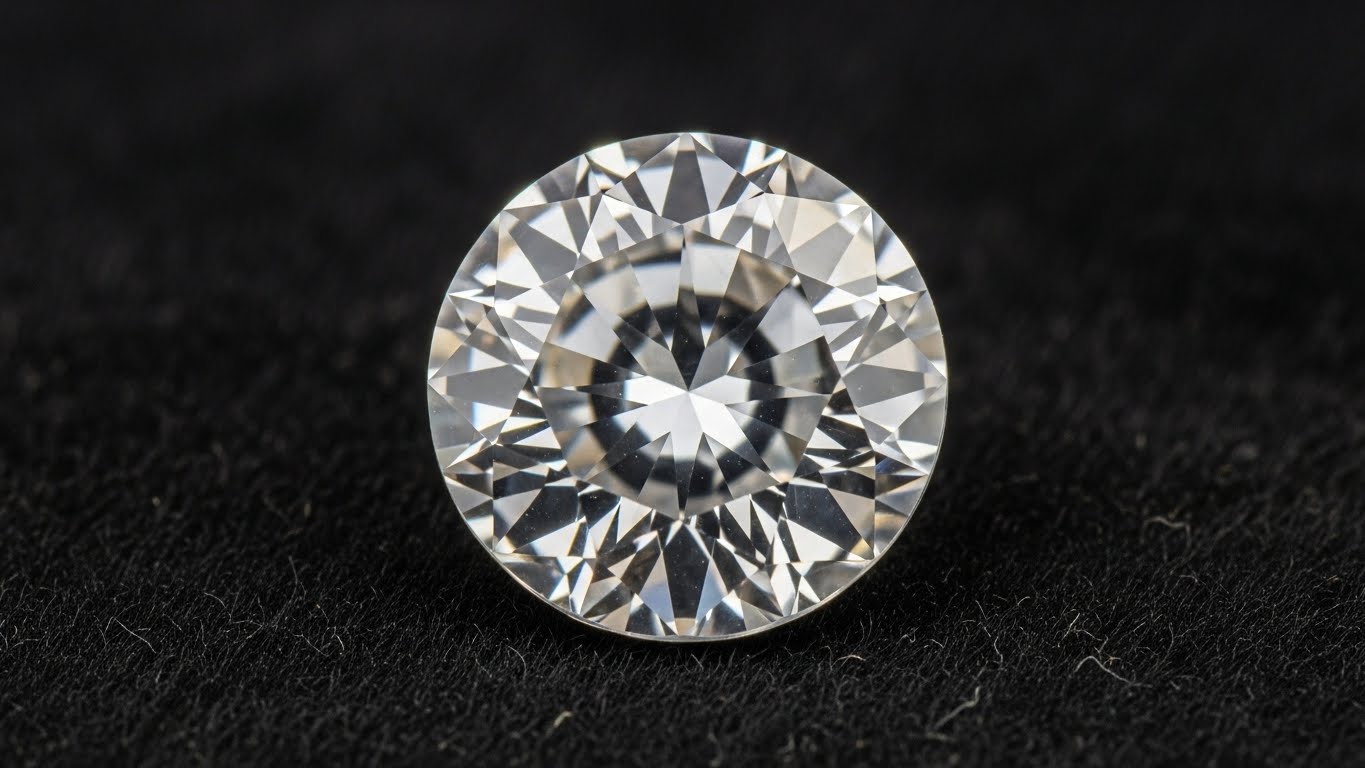
As we navigate the 2025 jewelry landscape, white sapphires are trending for their “understated elegance.” But unlike diamonds, which are cut to a standardized “Ideal” formula, white sapphires are often cut for weight retention rather than light performance.
To find a stone with true brilliance, you must look beyond the shape and analyze the specific technical proportions that prevent the “watery” look common in lower-grade white corundum.
1. The Refractive Reality: Brilliance vs. Fire
A white sapphire’s beauty is defined by Brilliance (white light return) rather than Fire (rainbow flashes).
- Refractive Index (RI): At 1.76 white sapphires bend light less sharply than diamonds.
- Dispersion: Their dispersion (fire) is 0.018—less than half that of a diamond (0.044).
- The Strategic Shift: Because white sapphires lack rainbow fire, their value is found in their silvery luster and crisp facet edges. A well-proportioned stone should look like a “pool of pure water” rather than a disco ball.
2. The “Windowing” Trap: Why Depth is Crucial
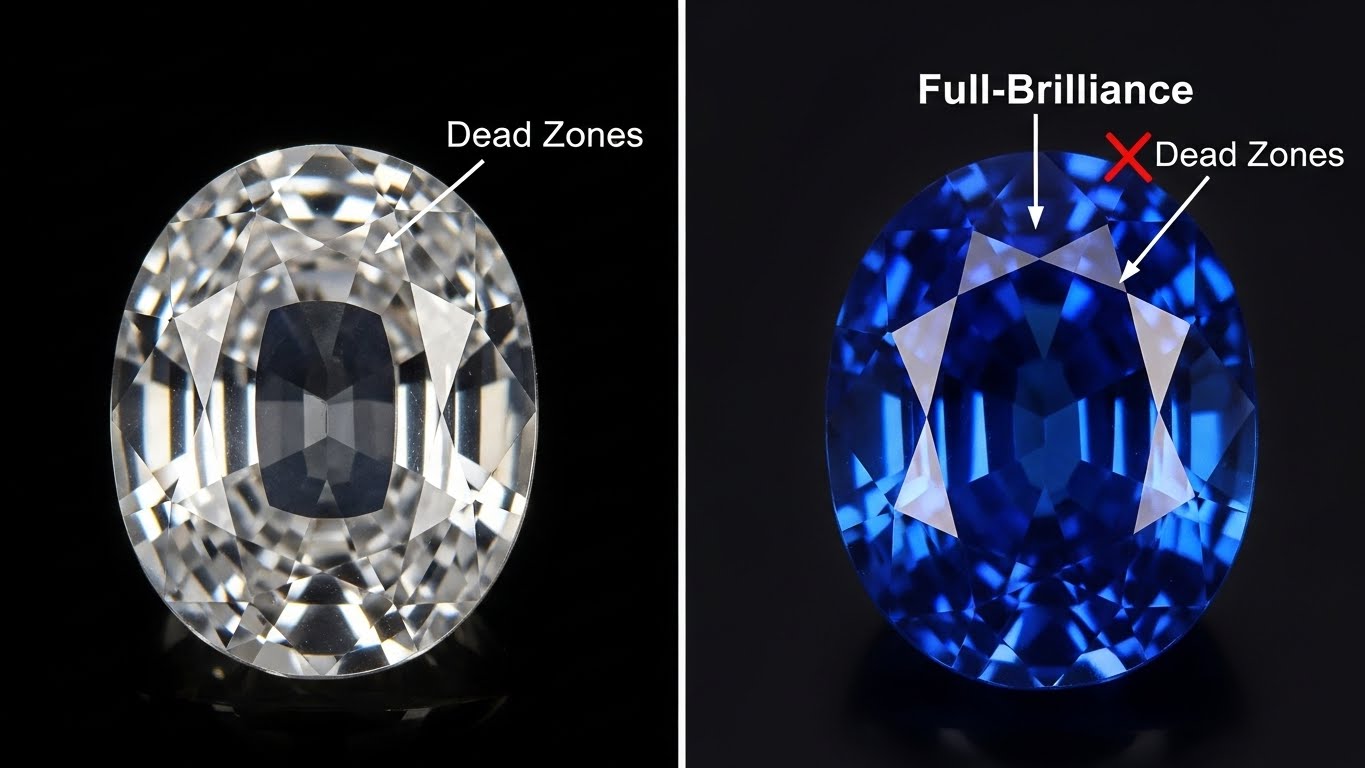
In 2025, many commercial-grade white sapphires are cut too shallow to save carat weight. This creates a “window”—a dead area in the center of the stone where light passes straight through instead of reflecting back to your eye.
- The Proportion Rule: To avoid windowing, a white sapphire usually requires a deeper pavilion (the bottom half of the stone) than a diamond.
- The Leakage Test: If you place your white sapphire over a piece of text and can read the letters through the stone, it has a window. An investment-grade stone should be opaque with light reflection when viewed from the top.

3. Contrast Patterning: The Secret to “Liveliness”
A brilliant white sapphire needs a balance of light and dark areas, known as contrast patterning.
- The “Glassy” Effect: If a stone is cut with facets that are too large or poorly angled, it loses its “life” and looks like a piece of glass.
- Precision Cutting: Look for “precision-cut” or “custom-cut” white sapphires. These use modern software to calculate the exact angles—usually a Crown Angle of 34°–37° and a Pavilion Angle of 40°$–$41°—to maximize the specific RI of corundum.
4. The Maintenance of Brilliance
Because of their lower RI, white sapphires are “needy” gems. They attract oils and dust more readily than diamonds, and even a thin film of lotion can “kill” their brilliance.
- 2025 Best Practice: To maintain the silvery glow you paid for, white sapphires require cleaning once a week with warm, soapy water.
- Hardness Note: At a 9 on the Mohs scale, they are incredibly durable, but their facet edges can “abrade” (become slightly rounded) over decades of heavy wear.12 Ensure your stone is set in a protective mounting if it’s for an engagement ring.
The Connoisseur’s Choice
Choosing a white sapphire is an exercise in appreciating subtlety. When the proportions are perfect, the stone offers a sophisticated, icy brilliance that is distinctly different from the aggressive sparkle of a diamond. It is the choice of the investor who values natural rarity and architectural precision over standardized “bling.
“Want to see the difference between a “windowed” and a “precision-cut” stone? [Request Our Video Comparison Guide] to see 4K macro footage of white sapphires under professional laboratory lighting.