
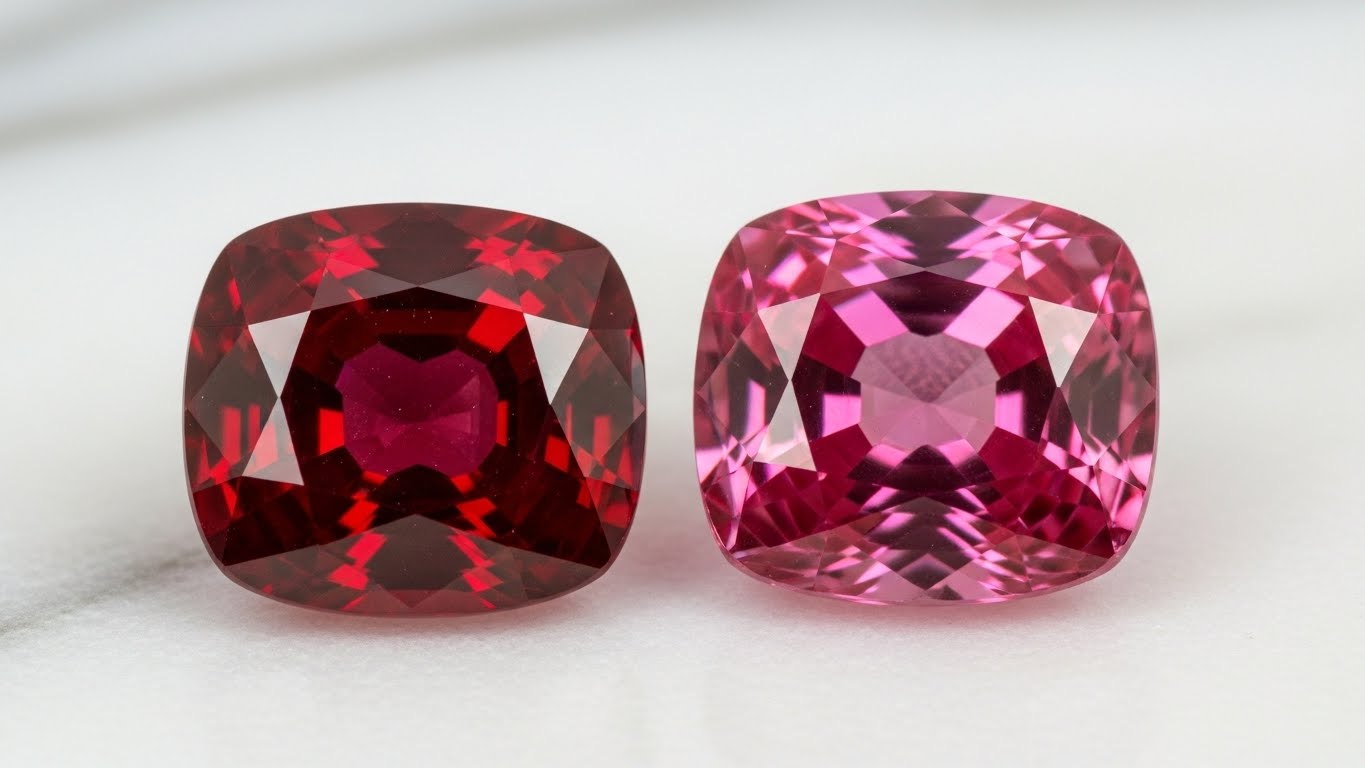
In 2025, the “Red vs. Pink” debate has moved beyond the laboratory and into the heart of strategic asset diversification. While a high-quality ruby remains the “King of Gemstones,” the pink sapphire has seen a 7.2% surge in market demand, particularly among younger HNWIs seeking romantic, ethical alternatives to traditional red.
But where does a pink sapphire end and a ruby begin? If you are commissioning a bespoke piece or looking for a portable wealth asset, understanding this distinction is crucial for your ROI.
The Gemological “Line in the Sand”
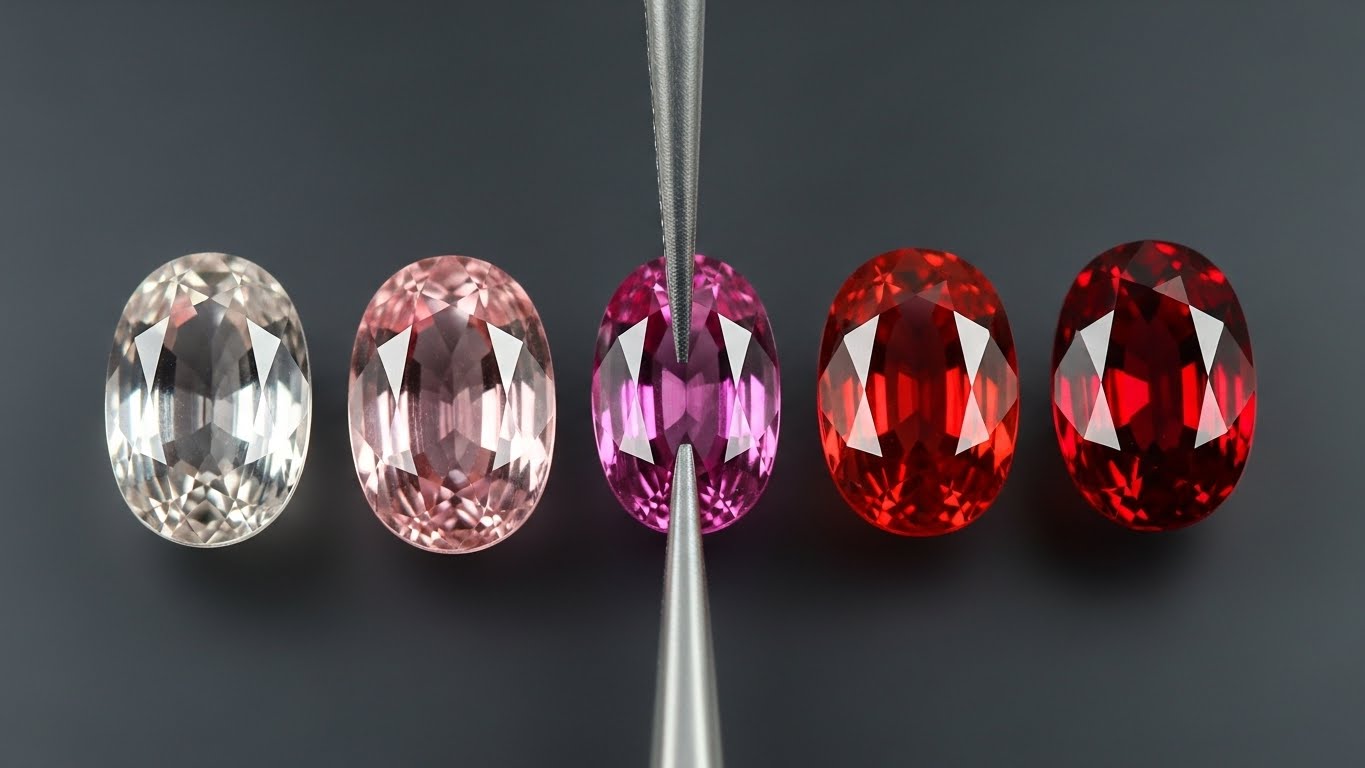
Scientifically, both stones are aluminum oxide colored by chromium. The difference is purely a matter of saturation and tone.
- The GIA Standard: The Gemological Institute of America (GIA) dictates that for a stone to be called a ruby, red must be the dominant hue.
- The Pink Sapphire Shift: If the stone’s tone is too light or its saturation too weak, it is classified as a pink sapphire.
This distinction is massive for your wallet: a stone graded as a “Light Red Ruby” can be worth 5 to 10 times more than the exact same stone graded as a “Vivid Pink Sapphire.” In 2025, the most savvy investors are targeting “top-color” pink sapphires—those that sit right on the edge of the ruby line—to capture maximum beauty at a more competitive price point.
Investment Value: The “Pigeon Blood” vs. “Hot Pink”
When it comes to ruby vs. pink sapphire investment, the two follow very different price curves:
- The Ruby Peak: The “Pigeon Blood” ruby (vivid red with a soft blue fluorescence) is the blue-chip asset. In 2024, unheated Burmese rubies reached record highs of $120,000+ per carat for 5-carat specimens.
- The Pink Sapphire Opportunity: High-end pink sapphires, particularly the “Hot Pink” or “Bubblegum” varieties from Sri Lanka (Ceylon), offer high liquidity. While they are more affordable (averaging $900–$3,000 per carat for standard sizes), unheated, 5-carat+ specimens are now reaching tens of thousands of dollars as “statement stones.”
Durability and Symbolism in High-End Design
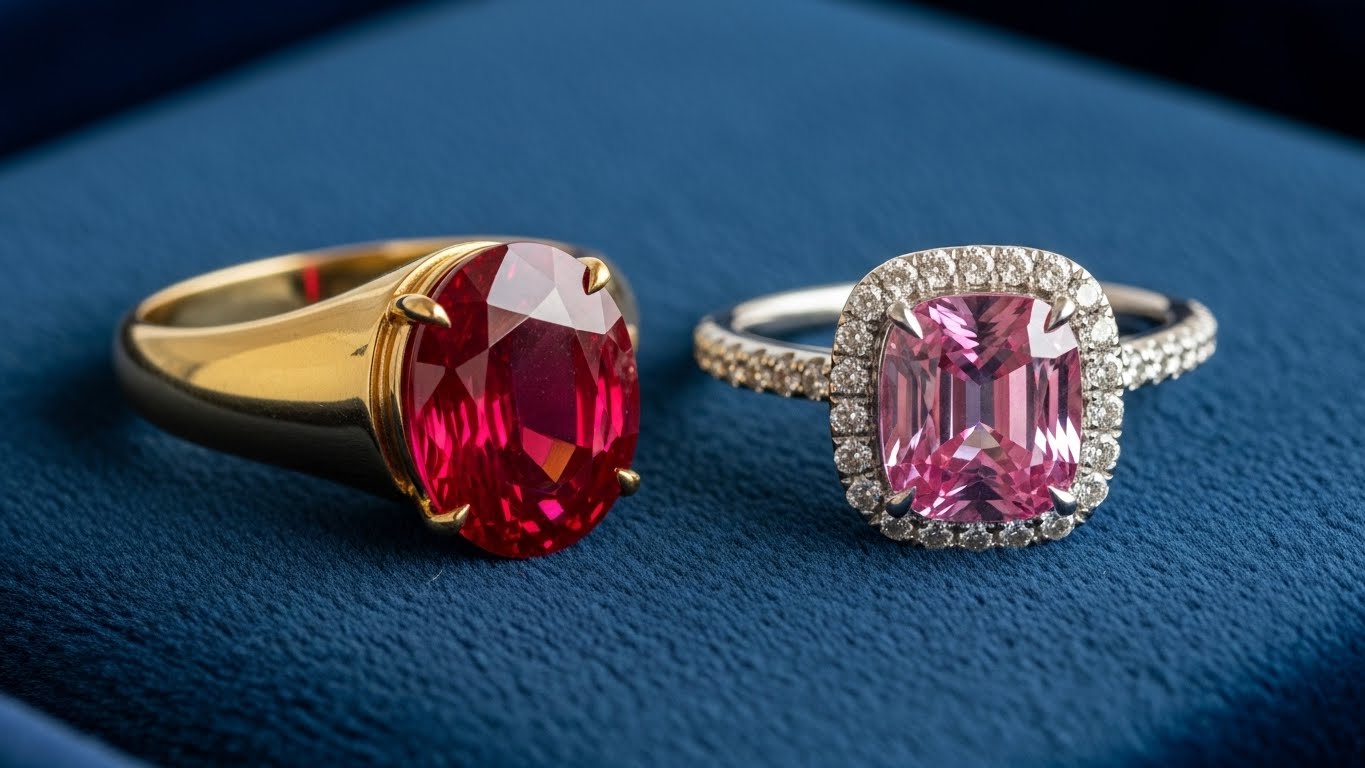
Both stones are equally resilient, making them perfect for daily-wear engagement rings or heritage necklaces. However, their “vibe” in high-end jewelry differs:
- Ruby: Traditionally symbolizes passion, power, and protection. It is the choice for bold, dramatic statement pieces that command a room.
- Pink Sapphire: Symbolizes trust, romance, and elegance. It is the preferred stone for contemporary “feminine-chic” designs and pairs beautifully with both rose gold and platinum.
The “No-Heat” Imperative for 2025
Regardless of which stone you choose, the “No Heat” status is your primary value protector.
- Rubies: Almost all rubies are heated to remove purple tints. An unheated ruby is a geological miracle and should always be your first choice for a portfolio.
- Pink Sapphires: While pinks are often unheated, always verify this with a GIA or GRS certificate. In 2025, unheated status can add a 30-50% premium to a pink sapphire’s value.
Making the Final Selection
If you are looking for an aggressive growth asset with a centuries-old pedigree, the unheated Ruby is the gold standard. However, if you want a stone that offers “vivid brilliance,” high durability, and better value-for-carat in 2025, the Pink Sapphire is the strategic choice for modern luxury.
Unsure which hue fits your portfolio? [Request a Color Comparison Suite] to view HD 4K videos of GIA-certified rubies and pink sapphires side-by-side and find the perfect balance of rarity and beauty.