
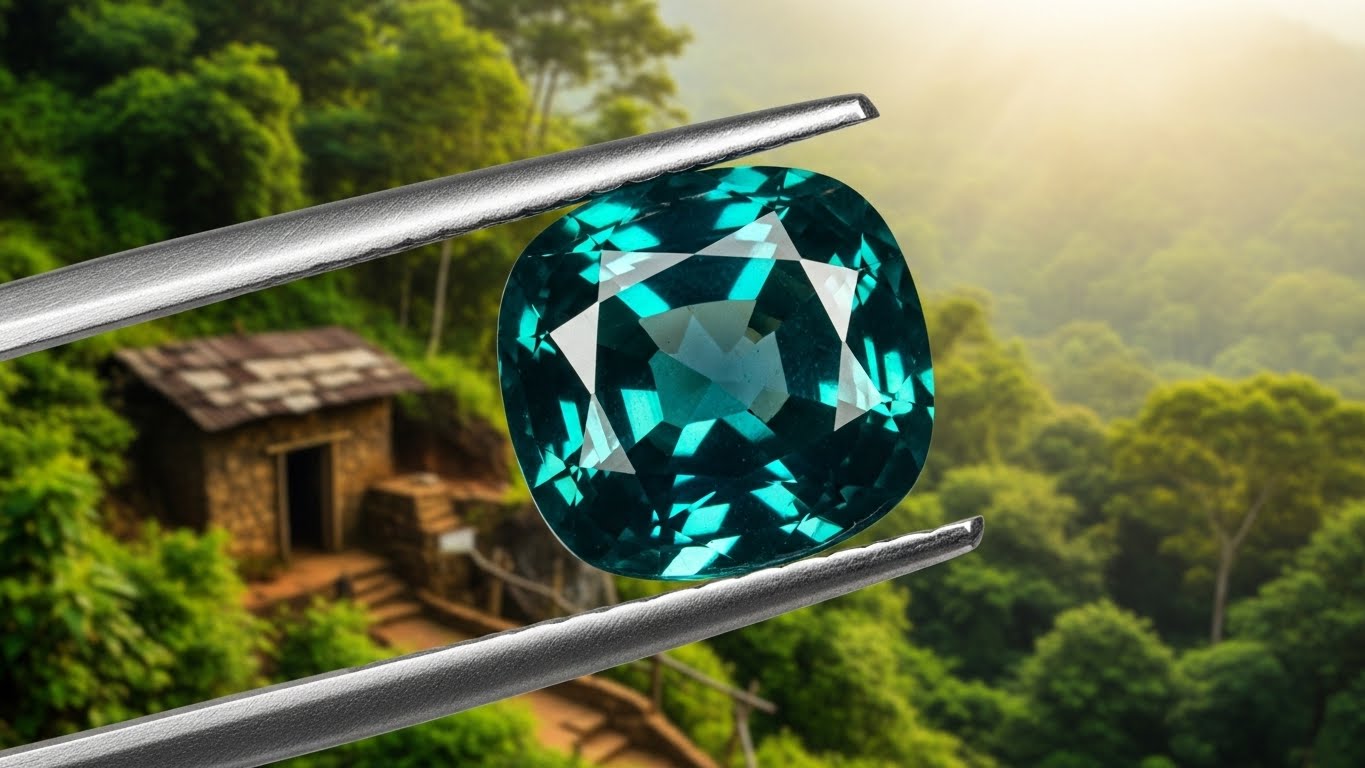
If you are a high-net-worth individual or a professional seeking a unique, durable asset, the teal sapphire likely sits at the top of your list. These stones are celebrated for their “moody” color shifts and exceptional hardness. However, as the 2025 market sees a 72% increase in demand for ethically sourced gems, the challenge is no longer just finding a beautiful stone—it is verifying its journey from the earth to your hand.

1. The “Ceylon” vs. “Australian” Origin Conflict
While Australia is famous for “Parti” and teal sapphires, Sri Lankan (Ceylon) teal sapphires command a higher premium in the 2025 market due to their superior clarity and “glow.”
- The Geological Fingerprint: Sri Lankan teals are metamorphic, meaning they formed under intense heat and pressure, resulting in a bright, vivid luster. Australian teals are often basalt-related, which can result in an “inky” or darker appearance.
- Verifying Origin: Geographic origin determination is complex. In 2025, advanced ICP-MS (Inductively Coupled Plasma Mass Spectrometry) is the only way to verify origin with 99% accuracy by analyzing trace elements like vanadium and iron. Always demand a report that specifies “Country of Origin: Sri Lanka.”
2. Ethical Mining: The Artisanal Advantage
The 2025 investor prioritizes ESG (Environmental, Social, and Governance) compliance. Sri Lanka leads the world in this area through its artisanal mining model.
- Minimal Footprint: Unlike the massive open-pit mines found in other regions, Sri Lankan mines are typically small-scale shafts. These methods minimize deforestation and soil erosion.
- The “Family Affair” Ethics: Most Sri Lankan mines are community-owned. Profits are shared among the miners, the land owners, and the license holders, ensuring that wealth stays within the local community.
- Satellite Monitoring: In 2025, innovative dealers are using satellite-based monitoring to provide real-time proof that their mining sites are being rehabilitated with new vegetation after the gems are extracted.
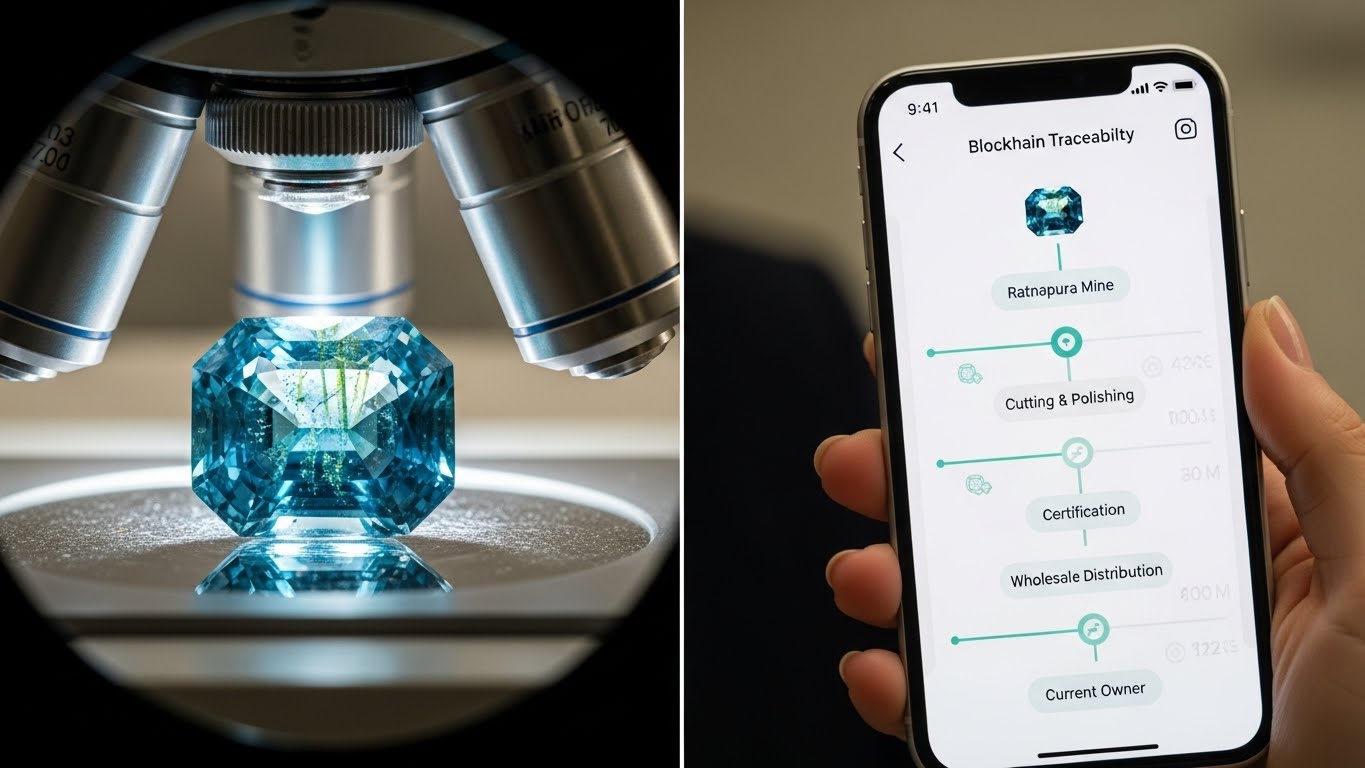
3. The 2025 Transparency Checklist
When vetting a source for an ethically sourced teal sapphire, look for these three pillars of transparency:
- NGJA Licensing: Any dealer exporting from Sri Lanka must be licensed by the National Gem and Jewellery Authority. Ask for their license number and verify it on the official NGJA portal.
- Blockchain Traceability: Leading 2025 suppliers now offer blockchain-linked certificates. This digital “passport” records every hand the stone has passed through, from the specific pit in Ratnapura to the master cutter in Colombo.
- Treatment Status: Teal sapphires are frequently unheated because their color is already so unique. However, ensure your GIA or GRS certificate explicitly states “No Indications of Thermal Treatment.”
4. Investing in the “Living” Gem
Teal sapphires are often “color-change” or “pleochroic,” meaning they show different hues in different lighting. In a world of mass-produced luxury, this individuality is the ultimate luxury. For a 2-3 carat investment-grade teal, expect to see annual appreciation rates of 8-10% as global supply for these specific “bi-color” gems remains finite.
Align Your Wealth with Your Values
A teal sapphire from Sri Lanka is more than an investment in beauty; it is an investment in a centuries-old tradition that respects both the worker and the land. By insisting on GIA certification and NGJA-licensed dealers, you ensure that your portfolio grows as sustainably as the mines themselves.
Ready to source a stone with a clear conscience? [Request Our 2025 Ethical Sourcing Report] and browse our exclusive vault of blockchain-verified, unheated Ceylon Teal Sapphires.