
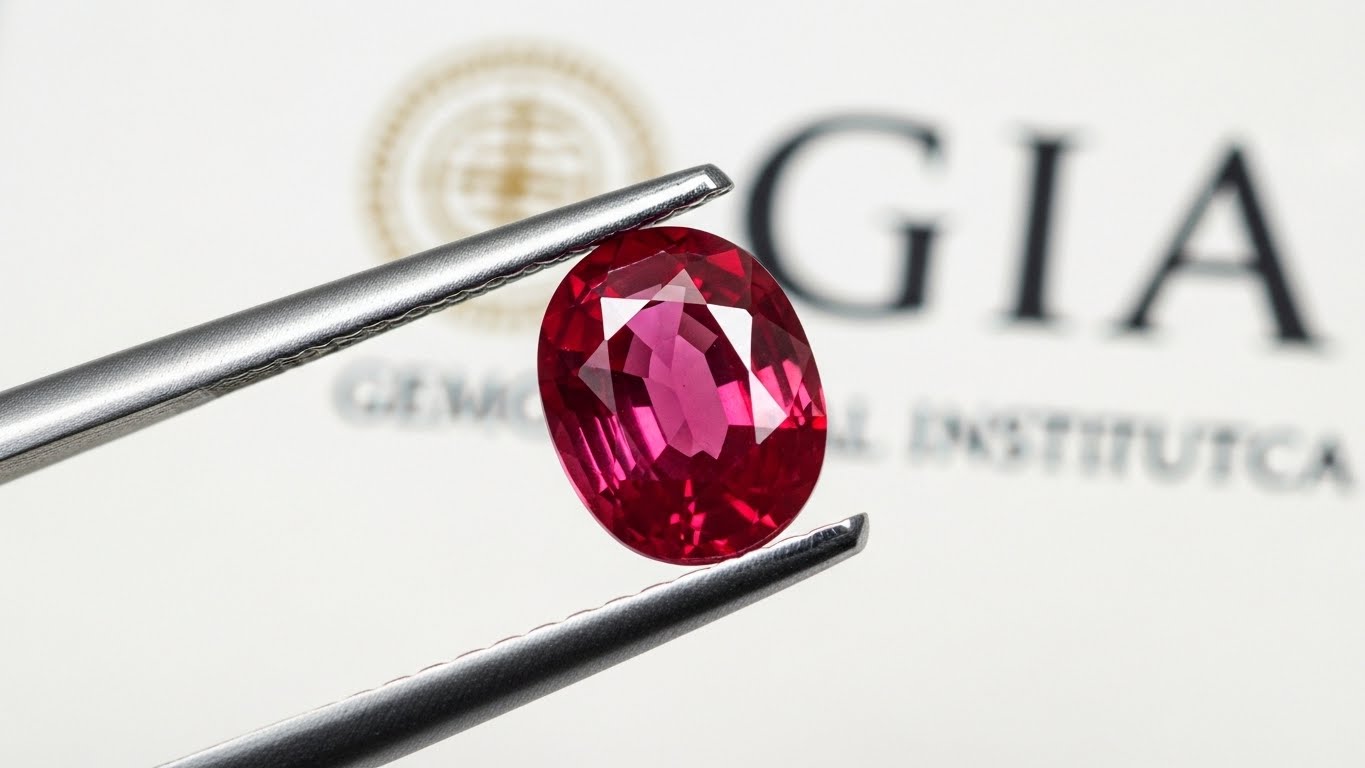
Sri Lankan rubies—often celebrated for their vibrant pinkish-red hues and exceptional “vibrant brilliancy”—occupy a unique niche in the 2024-2025 market. While Burmese rubies command the highest price-per-carat, Ceylon rubies offer a more accessible entry point for diversification with a projected 5.5% CAGR through 2034.
But here is the catch: as treatments become more sophisticated, “trusting your jeweler” is no longer a viable risk management strategy. Here is why the GIA report is your most powerful tool for capital protection.
1. The “Natural vs. Lab-Grown” Shield
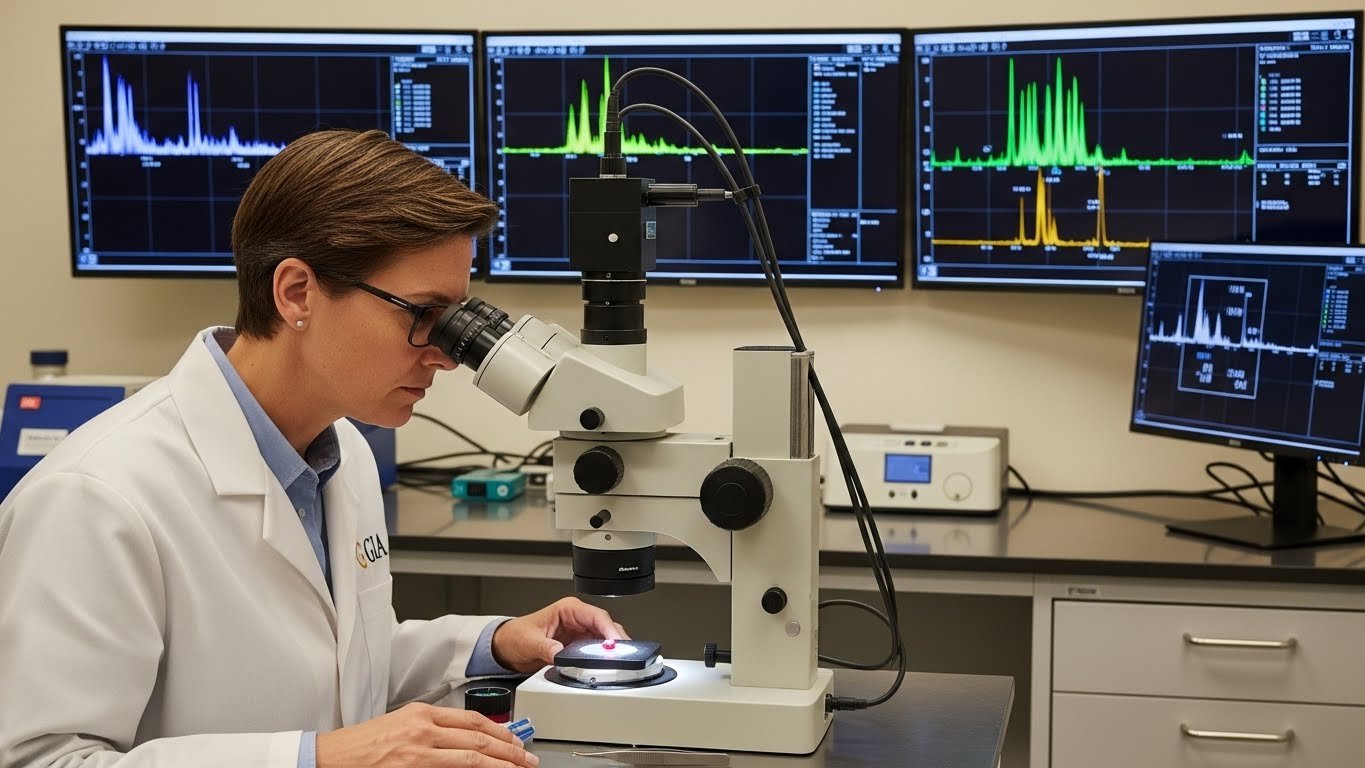
In 2024, lab-grown ruby sales surged by 27%. Modern hydrothermal and flux-growth synthetics can mimic the internal “fingerprints” of a natural Sri Lankan ruby so closely that even experienced dealers can be misled.
A GIA Identification Report utilizes advanced spectroscopy and chemical analysis to provide a definitive verdict. For an investor, this isn’t just a label; it’s a guarantee that you aren’t paying a “rarity premium” for a stone created in a factory.
2. Detecting the “Invisible” Enhancements
Sri Lanka is a global hub for gemstone “processing.” While standard heat treatment is widely accepted, it still impacts the stone’s ceiling for appreciation.
- The “Unheated” Premium: An unheated Sri Lankan ruby can command a 50% to 100% premium over a heated one.
- Beyond Heat: GIA’s rigorous testing uncovers more invasive treatments like lead-glass filling or beryllium diffusion, which can render a stone virtually worthless to a collector.
Without a GIA report explicitly stating “No indications of heating,” you are effectively flying blind in a market where the “unheated” status is the primary driver of ROI.
3. Origin Verification: The “Ceylon” Premium
While Mozambique rubies are currently flooding the market, a certified Sri Lankan (Ceylon) origin carries a historical prestige that aids in liquidity. GIA gemologists use trace element analysis to “geo-tag” your stone.
- Market Tip: In the 2025 secondary market, a ruby with a confirmed Ceylon origin resells faster and at more stable price points than stones of “undetermined” origin.
4. Global Liquidity and Auction Readiness
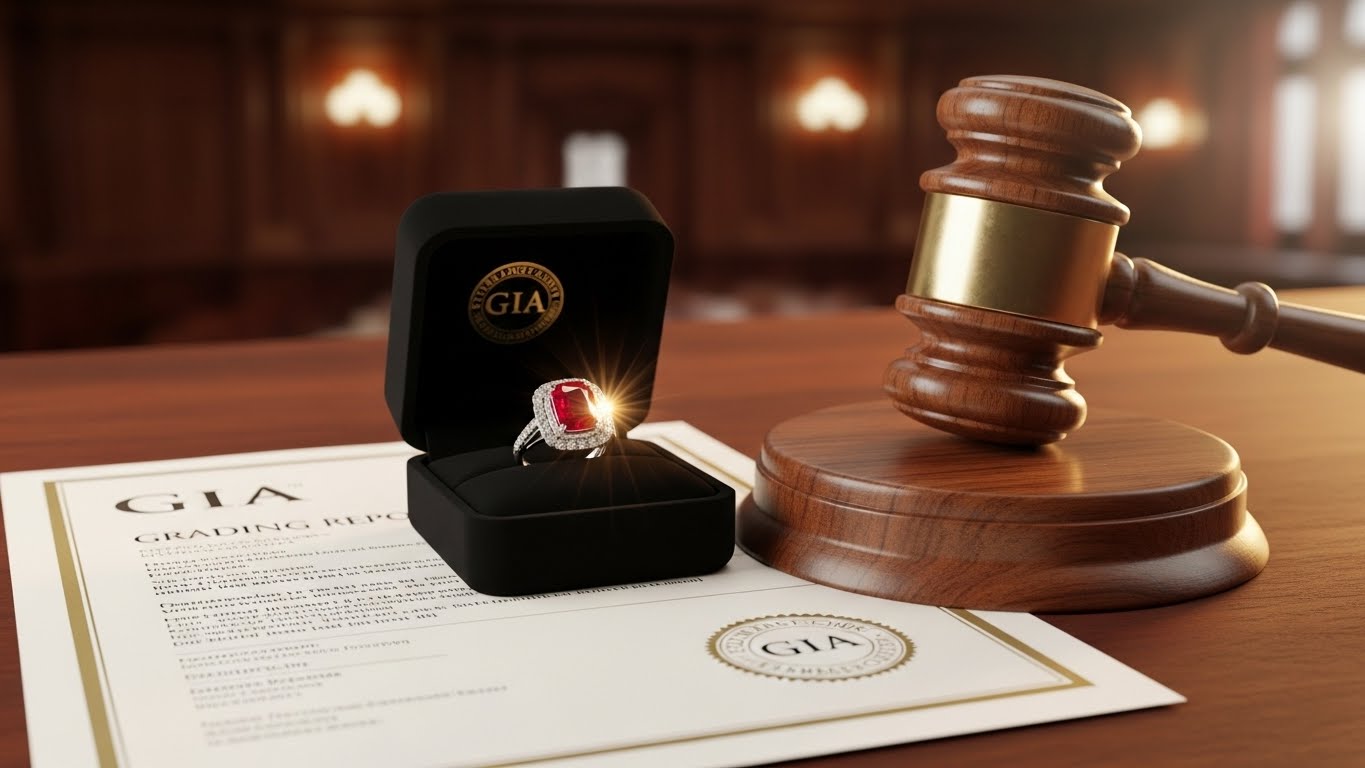
Think of a GIA certificate as a “Gemstone Passport.” Whether you are looking to sell your asset in New York, Hong Kong, or through an elite auction house like Sotheby’s, the GIA name is universally recognized.
- Resale Value: Certified stones consistently retain their value 15-20% better than uncertified ones.
- Appraisal Accuracy: Most insurance companies in 2025 require a reputable lab report to provide full-value coverage for “Schedule L” luxury assets.
Don’t Invest on an “Opinion”
A local “store certificate” is merely an opinion; a GIA report is a scientific audit. If you are a professional or a high-net-worth individual looking to hedge against inflation with Sri Lankan rubies, demand the gold standard.
Is your portfolio protected? [Schedule a Portfolio Audit] with our gemological consultants today. We specialize in sourcing GIA-certified, unheated Sri Lankan rubies that meet the highest standards of transparency and growth potential.